What Hiring Managers Are Actually Listening For: The Rise of Sensory Fluency in Premium Retail Interviews
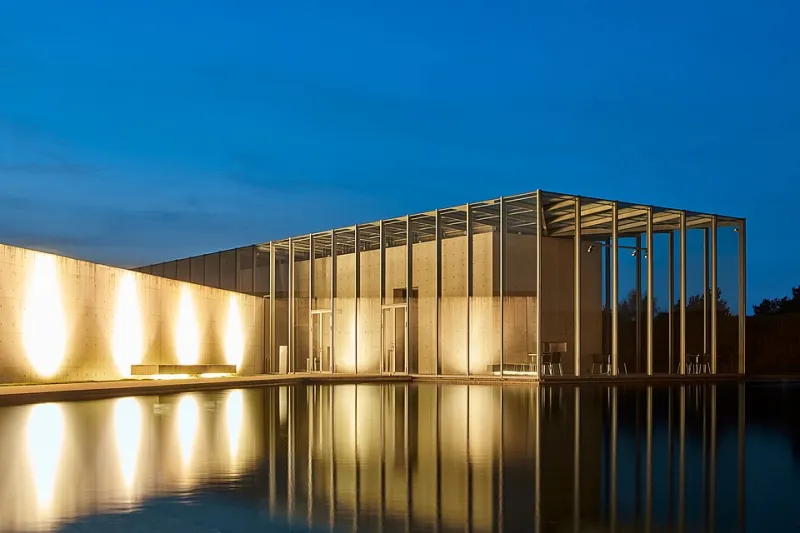
Photo: Anıl Öztaş, CC BY-SA 4.0, via Wikimedia Commons
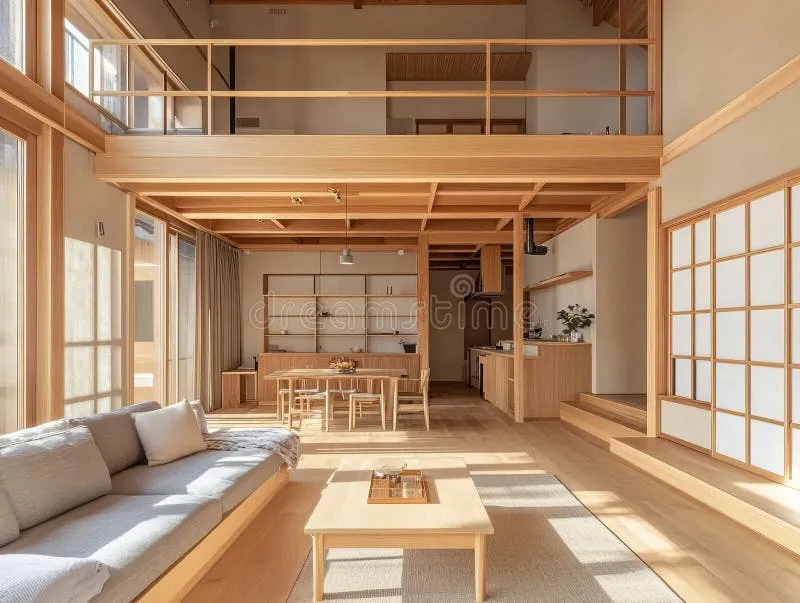
There is a particular kind of silence that falls over a well-designed room. It is not the silence of emptiness. It is the silence of intention — the feeling that every surface, every angle of light, every material choice has been made with the same deliberate care as a sentence in a carefully edited letter. In Japanese design philosophy, this quality is sometimes described through the concept of ma: the meaningful use of negative space, the pause that gives form its resonance.
For job seekers pursuing careers in premium retail and home design, that silence is now being tested in the interview room.
Across the United States, a growing number of premium retailers drawing from Japanese aesthetic traditions are fundamentally rethinking what a hiring conversation should accomplish. The shift is subtle but unmistakable: the standard behavioral question — Tell me about a time you resolved a customer conflict — is giving way to something far more unusual. Candidates are being asked to describe how afternoon light falls differently than morning light. They are being prompted to articulate the emotional difference between a smooth ceramic surface and a rough-hewn one. They are being invited, in essence, to demonstrate that they feel spaces rather than merely occupy them.
This is not a trend born of novelty. It reflects a genuine and deepening understanding of what premium retail actually requires.
Why Sensory Awareness Has Become a Professional Credential
The conventional retail interview was designed to surface competencies that mattered in a transactional environment: efficiency, conflict resolution, upselling technique, schedule flexibility. These remain relevant. But in a retail context shaped by Japanese design values — where the store itself is considered an experiential composition, where product placement carries aesthetic weight, and where a customer's emotional state is considered part of the brand's responsibility — those competencies tell only a fraction of the story.
What premium design retailers now require is something closer to what architects and curators have long understood: the ability to read an environment as a form of communication. A candidate who can walk into a showroom and immediately identify why a particular corner feels unsettled — perhaps the lighting temperature is mismatched, perhaps a textile is introducing visual noise — is a candidate who can serve as a genuine steward of the brand's identity.
This capacity is not purely instinctive. It can be cultivated. But it must first be recognized as a professional skill worth developing.
What These Interview Questions Actually Sound Like
For candidates encountering this style of interview for the first time, the questions can feel disorienting. There is no obvious right answer, no formula to apply. That is, of course, precisely the point.
Some examples that have emerged in premium retail hiring conversations include:
- Walk me through how you would describe the feeling of this room to someone who has never been inside it.
- If you were selecting a fabric for a living room intended for quiet evening use, what qualities would guide your choice, and why?
- What is the difference between a space that feels calm and a space that feels empty?
- Describe a material or texture you encountered recently that stayed with you. What made it memorable?
Notice that none of these questions ask for credentials, past performance metrics, or procedural knowledge. They are asking candidates to demonstrate what might be called embodied understanding — a relationship with the physical world that is reflective, articulate, and emotionally intelligent.
For hiring managers at brands shaped by Japanese aesthetic principles, the quality of a candidate's language around sensory experience is itself a form of evidence. Someone who reaches instinctively for precise, evocative language — who can distinguish between diffuse and soft when describing light, or between weight and density when discussing textiles — signals a mind that has been paying close attention.
How to Develop and Demonstrate Sensory Fluency
The encouraging reality for job seekers is that sensory fluency is not a gift reserved for those with formal design training. It is a discipline that responds to practice. Several approaches have proven particularly effective for candidates preparing to enter this interview landscape.
Cultivate a vocabulary of material experience. Begin keeping a personal record — a notebook, a digital document, even a voice memo archive — of environments, objects, and textures that produce a distinct emotional response. Do not simply note that something was nice or pleasant. Push toward specificity. What quality of light was present? What did the surface temperature suggest about the material's composition? How did the scale of the space affect your sense of time? This practice builds the descriptive precision that interviewers are listening for.
Engage seriously with Japanese design literature and principles. Concepts such as wabi-sabi (the beauty of impermanence and imperfection), kanso (simplicity), and ma (negative space) are not merely decorative vocabulary. They represent coherent frameworks for understanding why certain environments affect us as they do. Candidates who can reference these frameworks naturally — not as borrowed terminology, but as genuinely internalized ways of seeing — communicate both cultural literacy and aesthetic depth.
Practice articulating emotional responses to spaces. Visit design showrooms, art galleries, well-curated retail environments, and even thoughtfully designed public spaces. After each visit, spend ten minutes writing about the experience. What was the dominant sensory register of the space? What design choices appeared to be intentional, and what effect did they produce? This exercise sharpens both perception and expression simultaneously.
Resist the urge to perform expertise. One of the most common mistakes candidates make in sensory-focused interviews is reaching for technical jargon as a substitute for genuine engagement. Interviewers at design-forward retailers are generally more interested in authentic perception than in demonstrated familiarity with design history. Honesty about what you notice, combined with the willingness to reflect carefully on why it matters, is consistently more persuasive than a rehearsed display of knowledge.
The Larger Signal This Trend Is Sending
The emergence of sensory-focused hiring practices is not an isolated phenomenon. It reflects a broader recalibration of what premium retail brands believe their people need to embody. As American consumers increasingly seek out environments and products that offer genuine aesthetic coherence — spaces that feel considered rather than assembled — the professionals who serve those consumers must be capable of inhabiting and communicating that coherence themselves.
In this sense, the sensory interview is less a test than an invitation. It is an invitation to demonstrate that you understand retail not as a transaction but as an act of hospitality — one that begins with your own capacity to be present, attentive, and articulate in a world full of surfaces, textures, and quietly speaking light.
For candidates willing to accept that invitation, the preparation required is also, in its own way, a form of living better. And that, perhaps, is the most distinctly Japanese aspect of this emerging professional standard.