Rhythm Over Rush: What Japanese Seasonal Philosophy Teaches Us About Building a Career That Lasts

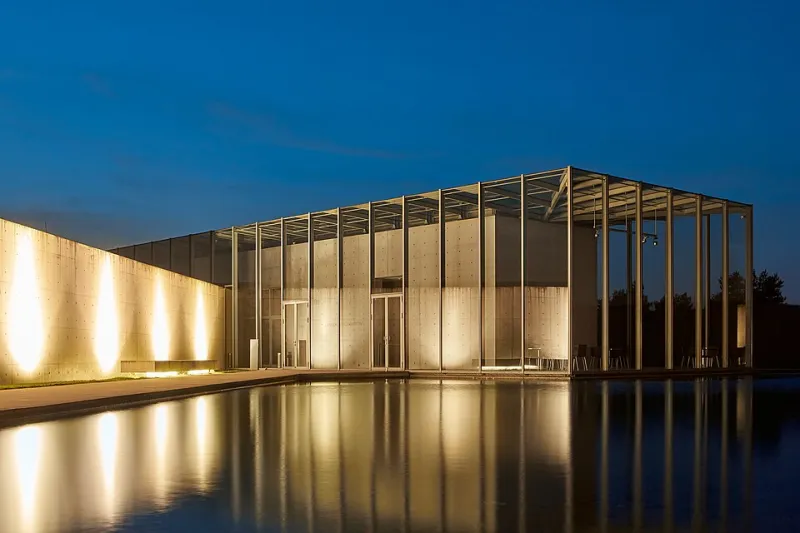
Photo: Rutger van der Maar from Leiden, The Netherlands, CC BY 2.0, via Wikimedia Commons
The Problem With Perpetual Growth
American retail culture has long celebrated the upward trajectory. The associate who closes the most sales, the manager who expands their territory, the buyer who consistently outperforms the prior quarter — these are the figures the industry has historically rewarded. Growth, in this context, is understood as linear: always forward, always more.
Yet a quiet countermovement is emerging within premium retail spaces, particularly those influenced by Japanese design and lifestyle philosophy. It does not reject ambition. Rather, it reframes ambition through a lens that is older, more patient, and — for many professionals — far more sustainable.
The concept at its center is not a management strategy or a productivity framework. It is, at its root, a way of perceiving time.
Mono No Aware and the Acceptance of Change
The Japanese phrase mono no aware translates roughly as "the pathos of things" — a bittersweet awareness of impermanence. Cherry blossoms are beautiful precisely because they fall. An autumn afternoon carries weight because it will not return. This sensitivity to the transience of moments is not melancholy; it is, in Japanese aesthetic tradition, a form of heightened attention.
For retail professionals, the relevance of this concept may not be immediately obvious. But consider how it applies to product cycles, consumer sentiment, and the rhythms of a career itself.
Seasonal merchandise lines do not simply rotate for logistical reasons. In Japanese-influenced retail environments, the seasonal shift is understood as a form of renewal — an invitation for both the space and the people within it to arrive differently. An employee who grasps this distinction does not merely swap out inventory. They recalibrate their approach to the customer, to the aesthetic of the floor, to the stories they tell about the objects in their care.
This is a skill that compounds quietly over years. And it is one that linear-growth thinking frequently overlooks.
What Premium Retailers Are Actually Observing
Hiring managers at premium lifestyle and home décor retailers have begun articulating something that was previously difficult to name: they are drawn to candidates who demonstrate what might be called temporal intelligence — an awareness of where they are in a cycle and how to respond accordingly.
This does not mean candidates who describe themselves as "flexible" or "adaptable" in the conventional sense. Those terms have become so ubiquitous in application materials that they carry little signal. What distinguishes the candidates who genuinely stand out is their ability to speak to why a particular moment calls for a particular response.
An associate who understands that the post-holiday retail period is not a decline but a necessary contraction — one that creates space for the deliberate curation of spring collections — demonstrates a relationship with time that is fundamentally different from one who simply endures the slow season. The former is already thinking about what the next phase requires. The latter is waiting for it to end.
In Japanese design philosophy, this distinction maps onto the concept of ma — the meaningful interval between things. Empty space is not absence. It is the condition that gives form its definition. Applied to a career, the periods of reduced intensity, role transition, or even deliberate lateral movement are not gaps. They are the intervals that make sustained excellence possible.
Adaptability as a Long-Term Asset
The retail industry in the United States has experienced significant disruption over the past decade. Shifting consumer preferences, the ongoing evolution of the in-store experience, and the integration of digital touchpoints have collectively redefined what retail expertise means. In this environment, professionals who built their identities around a single specialized function have often found themselves vulnerable.
Yet the professionals who have demonstrated the greatest longevity are frequently not those who accumulated the most credentials or pursued the fastest promotions. They are, in many cases, individuals who developed a broad and responsive relationship with their work — people who could move between roles, absorb new product knowledge, and reorient themselves as the industry shifted beneath them.
Japanese seasonal philosophy offers a useful vocabulary for understanding why. The practice of kisetsukan — a deep attunement to seasonal change — is not passive appreciation. It is active preparation. A retailer who truly understands the spring consumer mindset has spent the winter observing, reading, and positioning. By the time the season arrives, they are not catching up. They are already present.
For American retail professionals, cultivating this quality means resisting the pressure to define career progress exclusively through title advancement or salary increases. It means understanding that a year spent deepening product expertise, or a season spent mentoring a junior colleague, or a role transition that appears lateral on paper may be precisely the preparation a longer career requires.
The Competitive Advantage of Knowing When to Shift
There is a practical dimension to this philosophy that deserves direct attention. Premium lifestyle retailers — particularly those operating in the Japanese-influenced home goods and interior design space — are building teams with a longer horizon in mind. The cost of high turnover is well documented. What is less frequently discussed is the cost of retaining employees who have stopped growing because they have stopped paying attention.
The professional who understands seasonal rhythm brings something specific to this challenge: they know how to remain engaged across the full arc of a year, not just during peak periods. They approach the quieter months with the same intentionality they bring to the floor during high-volume seasons. They treat the transition between product lines as an opportunity to refine their perspective rather than an administrative task to complete.
This quality is difficult to teach and relatively easy to recognize in an interview. Candidates who can speak thoughtfully about a professional transition they navigated — not as a setback they overcame, but as a shift they understood and prepared for — are demonstrating exactly the kind of temporal awareness that premium retailers are increasingly seeking.
Designing a Career With Depth
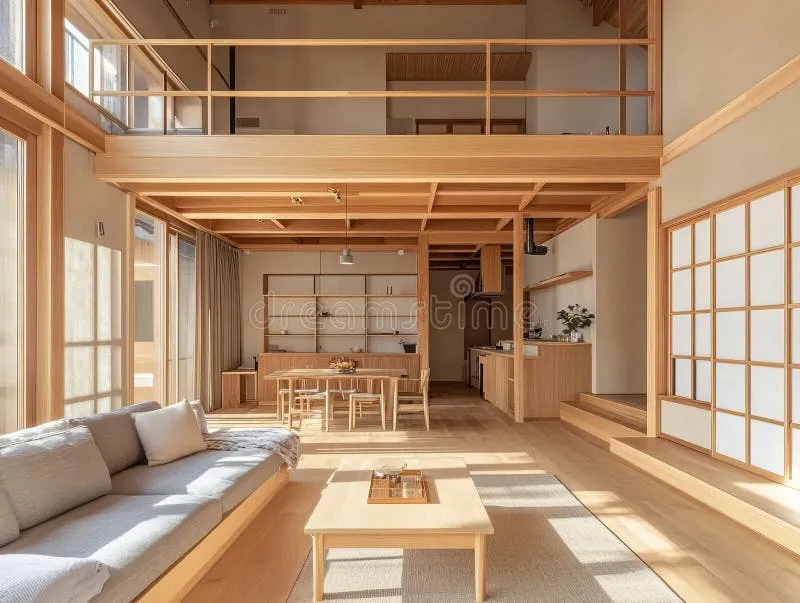
The Japanese design tradition is not one that prizes novelty for its own sake. Objects are made to last, to age with grace, to become more meaningful through use. Spaces are arranged to invite stillness as much as movement. The seasonal palette changes, but the underlying philosophy of the space remains coherent.
A career built on these principles looks different from one built on perpetual acceleration. It has texture. It has intervals. It reflects a professional who has been present across multiple seasons and who carries the accumulated understanding of each one.
For job seekers entering the premium retail and design space — and for those already within it who are considering their next move — this framework offers something genuinely useful: permission to think about longevity not as the absence of ambition, but as its most refined expression.
The seasons will change. The question worth asking is whether your career is designed to move with them.