What Retailers Are Really Testing When They Ask You to Describe a Room
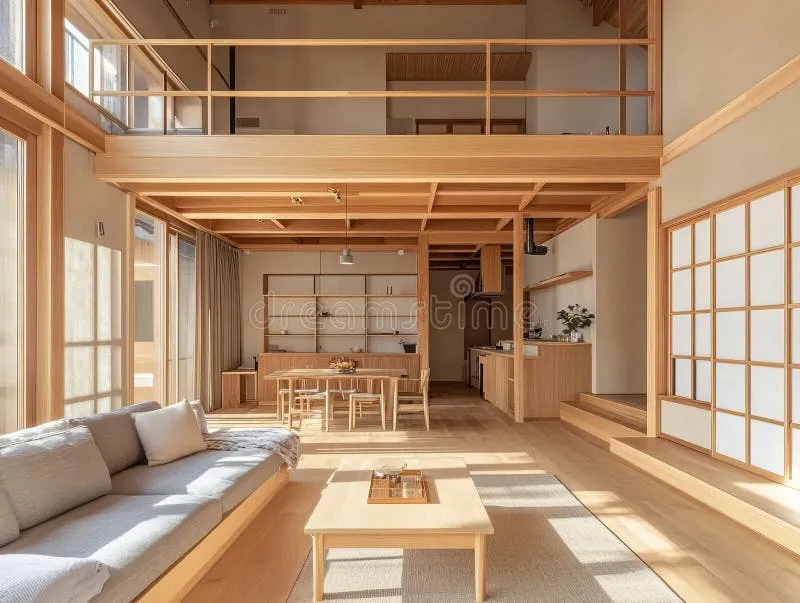
Photo: minimalist Japanese home decor showroom interior natural light ceramics textiles, via thumbs.dreamstime.com
When a hiring manager at a premium home décor retailer asks a candidate to walk through a showroom and describe what they notice, most applicants assume it is a casual warm-up exercise. It is not. Increasingly, that moment is the interview.
Across the United States, a meaningful shift is underway in how lifestyle and home furnishings brands evaluate prospective employees. Retailers rooted in Japanese aesthetic philosophy — a tradition that prizes sensory attentiveness as a form of professional competence — are moving away from résumé-first screening and toward evaluation methods that reveal how a candidate actually experiences space, material, and atmosphere. For job seekers pursuing roles in retail sales, visual merchandising, or client consultation, understanding this shift is no longer optional. It is the difference between advancing and being passed over.
Why Sensory Awareness Has Become a Hiring Criterion
Traditional retail interviews have long centered on behavioral questions: describe a conflict you resolved, explain a time you exceeded a sales target, demonstrate that you can operate a point-of-sale system. These questions remain relevant, but they measure execution. What premium home décor retailers are now also measuring is perception.
The logic is straightforward. A brand whose identity is built on refined materiality — the weight of a ceramic vessel, the way linen diffuses afternoon light, the proportion of a low table against a high-ceilinged room — cannot afford to place representatives on the floor who are indifferent to those qualities. If a sales associate cannot perceive the difference between two seemingly similar textiles, they will be unable to guide a customer toward the one that is genuinely right for their home. Aesthetic attentiveness, in this context, is not a soft skill. It is a technical requirement.
Japanese design philosophy has long articulated this expectation through concepts such as ma — the meaningful use of negative space — and wabi-sabi, the recognition of beauty in impermanence and subtle imperfection. Retailers who draw from this tradition are, in effect, hiring for cultural fluency. They want employees who can perceive what is present, what is absent, and why both decisions matter.
What a Sensory Interview Actually Looks Like
The format varies by organization, but several approaches have become common among premium lifestyle retailers operating in the United States.
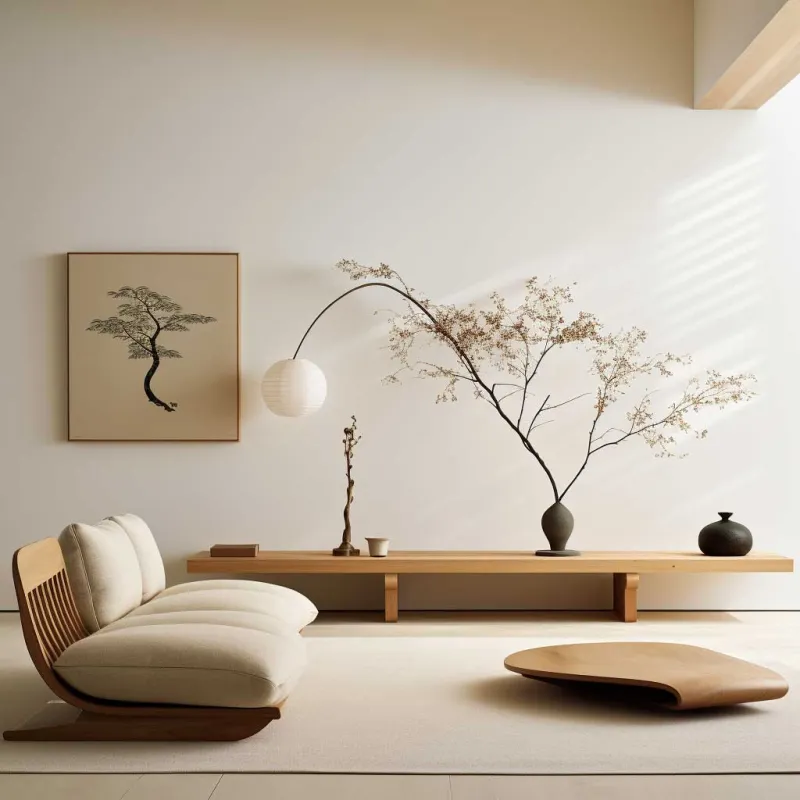
The observational walkthrough invites a candidate to move through a staged area of the store or showroom and narrate their experience aloud. Hiring managers are not evaluating taste in the subjective sense. They are listening for specificity, vocabulary, and the candidate's ability to distinguish between qualities that a casual observer might collapse into a single impression. Saying a room feels "calm" is less informative than noting that the low furniture line draws the eye downward, that the absence of overhead clutter creates a sense of vertical generosity, and that the matte surfaces reduce visual noise.
The material handling exercise places several objects in front of a candidate — textiles, ceramics, wood samples, glass — and asks them to describe each in terms of how it communicates. Weight, temperature, surface variation, and acoustic quality all become relevant. Candidates who engage with an object only visually often reveal a gap in tactile sensitivity that is difficult to train on the job.
The atmosphere question is perhaps the most revealing. A candidate might be shown a photograph of a room and asked not what they see, but what they feel — and then asked to explain the specific design decisions that produce that feeling. This exercise separates candidates who have internalized an aesthetic framework from those who are simply familiar with current trends.
Preparing for an Evaluation You Were Not Told Was Happening
The most important thing a candidate can do before interviewing with a premium home décor brand is to begin practicing attentiveness in daily life. This is not a preparation strategy that can be compressed into a weekend. It is a habit of mind that develops over time.
Visit design-forward spaces — museums, boutique hotels, well-regarded restaurants, independent home goods stores — and practice describing what you encounter in precise terms. Resist the impulse to reach immediately for evaluative language such as "beautiful" or "elegant." Instead, ask yourself what specific qualities produce that impression. Is it the scale of the furniture relative to the room? The temperature of the lighting? The absence of competing patterns?
Building a working vocabulary for sensory experience is equally valuable. Familiarize yourself with terms drawn from architecture, textile arts, and Japanese design traditions. Understanding the difference between shibui (restrained, understated beauty) and hade (bold, expressive aesthetics) gives you a richer language for discussing the choices a brand makes and the experiences it is attempting to create.
Review the brand's visual presence carefully before your interview — not just to demonstrate familiarity, but to develop a genuine point of view. Hiring managers in this sector can distinguish between a candidate who has memorized talking points and one who has genuinely engaged with the brand's sensory identity.
The Broader Implication for Design-Adjacent Retail Careers
This evolution in hiring practice reflects something larger than a single brand's preference. It signals a recalibration of what premium retail expertise means in America.
For decades, retail excellence was primarily defined by transactional skill: conversion rates, average order value, customer retention metrics. Those benchmarks have not disappeared, but they are increasingly understood as downstream outcomes of something more fundamental — the quality of the experience a retail environment delivers and the ability of its staff to steward that experience with genuine understanding.
As American consumers continue to invest in their home environments, particularly in the wake of a cultural shift toward domestic life that accelerated during the early 2020s, demand for retailers who can speak knowledgeably about materiality, atmosphere, and spatial intention has grown substantially. Brands whose design language draws from Japanese aesthetic traditions are particularly well positioned to meet this demand — and they are hiring accordingly.
For candidates who have always possessed a refined sensitivity to their physical environment but lacked a professional context in which to apply it, this shift represents a genuine opportunity. The sensory awareness that was once considered a personal trait rather than a professional credential is now, in select corners of the American retail landscape, exactly what hiring managers are looking for.
Preparing for that evaluation begins long before you walk through the door.