Selling Less to Mean More: How the Minimalist Retail Movement Is Reshaping Careers on the Sales Floor
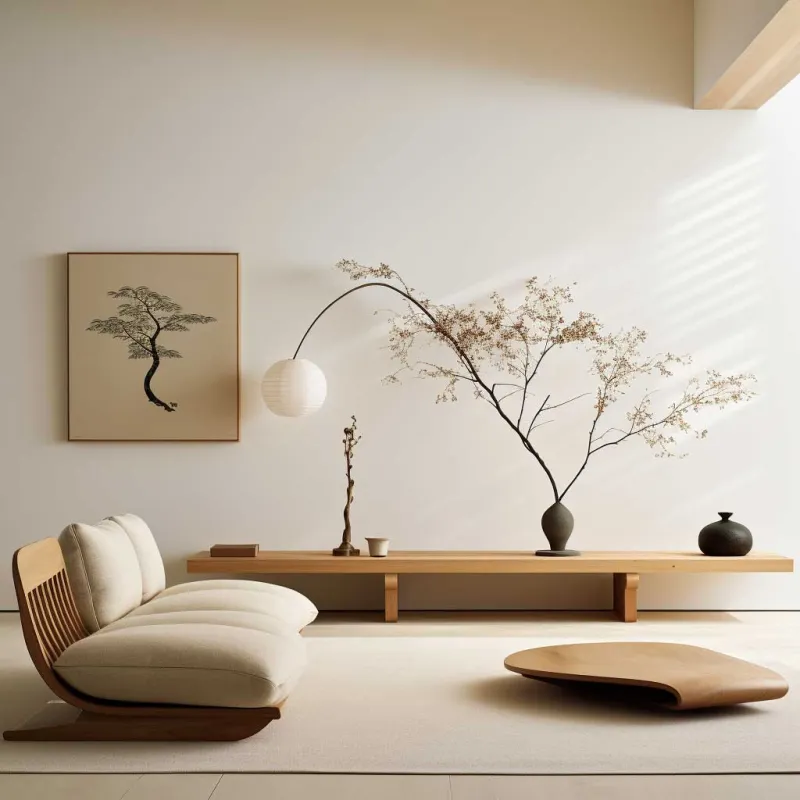
Photo: minimalist Japanese home decor retail store interior elegant display, via i.pinimg.com
When Less Becomes a Career Advantage
For most of the twentieth century, the measure of a great retail employee was simple: units moved, revenue generated, upsells secured. Walk into any big-box home goods store and you would feel it — the pressure, the promotions, the floor associates circling like hawks. That model built empires. It also exhausted customers.
Something has changed. Across the United States, a growing number of home décor and lifestyle retailers — particularly those rooted in Japanese aesthetic philosophy — are dismantling the hard-sell framework and replacing it with something quieter, more deliberate, and arguably more powerful. At Franc Franc, that shift is not a trend. It is a design principle applied to the retail experience itself.
The professionals navigating this transition are discovering that slowing down, asking better questions, and helping customers make fewer but more meaningful purchases is not only better for the customer — it is better for their careers.
The Showroom as a Curated Environment
Step into a Franc Franc retail environment and the difference is immediately perceptible. The space breathes. Products are arranged with intention, grouped not by category but by lifestyle moment — the morning ritual, the evening wind-down, the shared family meal. Nothing competes for attention because everything has been considered.
This spatial philosophy demands a different kind of employee. Store managers across the brand's US locations describe a consistent hiring priority: they are not looking for closers. They are looking for listeners.
"The customer who walks into one of our stores has usually already done research," explains one regional store manager based in California. "They are not impulse buyers. They are looking for someone who understands what they are trying to build in their home — emotionally, not just functionally. Our job is to help them find clarity."
That role — part consultant, part curator, part host — requires a skill set that traditional retail training rarely develops. It demands genuine product knowledge, an understanding of Japanese design principles such as ma (the productive use of negative space) and wabi-sabi (the beauty of imperfection), and the emotional intelligence to read what a customer actually needs rather than what they initially ask for.
From Transaction to Conversation: The Mindset Shift
For retail professionals making the move from conventional home goods environments into experience-driven spaces like Franc Franc, the adjustment can feel counterintuitive at first. The instinct to fill silence with a sales pitch runs deep. Unlearning it takes practice.
Design consultants at Franc Franc describe a training process that focuses heavily on active listening and spatial storytelling. New team members spend significant time learning how to walk a customer through a room concept rather than a product list. The conversation begins with questions about how the customer lives — not what they want to buy.
"I came from a furniture chain where the goal was always to add one more item to the ticket," says one design consultant who joined Franc Franc's Chicago-area showroom after nearly a decade in conventional retail. "Here, I might actually talk a customer out of buying something if it doesn't serve their space. And that builds trust in a way that keeps them coming back for years."
This consultative model is not merely a customer service philosophy. It is a structural career differentiator. Professionals who develop deep product literacy and genuine design sensibility find themselves qualifying for roles — senior design consultant, visual merchandising lead, customer experience manager — that simply do not exist in transactional retail environments.
The Skills That Transfer and the Ones You Will Build
For retail workers considering a move into the Japanese lifestyle retail sector, the good news is that foundational skills translate well. Experience managing customer relationships, maintaining floor standards, and working within team environments remains valuable. What must be developed — and what Franc Franc actively cultivates through internal training — includes:
Design literacy. Understanding proportion, color harmony, material texture, and how objects relate to one another in a shared space. This is not the exclusive domain of credentialed designers. Many of the most effective design consultants in the field built this knowledge through self-study, travel, and professional mentorship.
Consultative communication. The ability to ask open-ended questions, reflect back what a customer has expressed, and translate lifestyle preferences into product recommendations. This skill is learnable and, once developed, opens doors across the broader home décor industry.
Cultural fluency. Franc Franc's aesthetic is rooted in Japanese craft traditions. Team members who invest time in understanding the cultural context behind the products they represent — the history of a ceramic technique, the regional origin of a textile pattern — bring authenticity to customer conversations that no script can replicate.
Career Growth in the Experience Economy
The broader retail industry is contracting around volume-based models while simultaneously expanding around experience. Brands that offer customers something beyond a transaction — a perspective, an atmosphere, a philosophy — are outperforming their peers in customer retention and brand loyalty.
For career-minded retail professionals, this creates a clear strategic opportunity. Positions in experience-driven retail environments like Franc Franc tend to offer more defined growth pathways, greater creative involvement, and a stronger sense of professional identity than their transactional counterparts. Store managers in this space frequently move into regional visual merchandising roles, brand development positions, or training and development functions as the company scales.
The warehouse-to-showroom journey, in other words, is not just a physical move. It is a professional reinvention — one measured not in units sold, but in spaces transformed and relationships built.
For retail professionals ready to work at the intersection of design, culture, and genuine human connection, the minimalist retail movement is not a constraint. It is an invitation.