The Art of Intentional Pursuit: Applying Japanese Design Philosophy to Your Career Journey
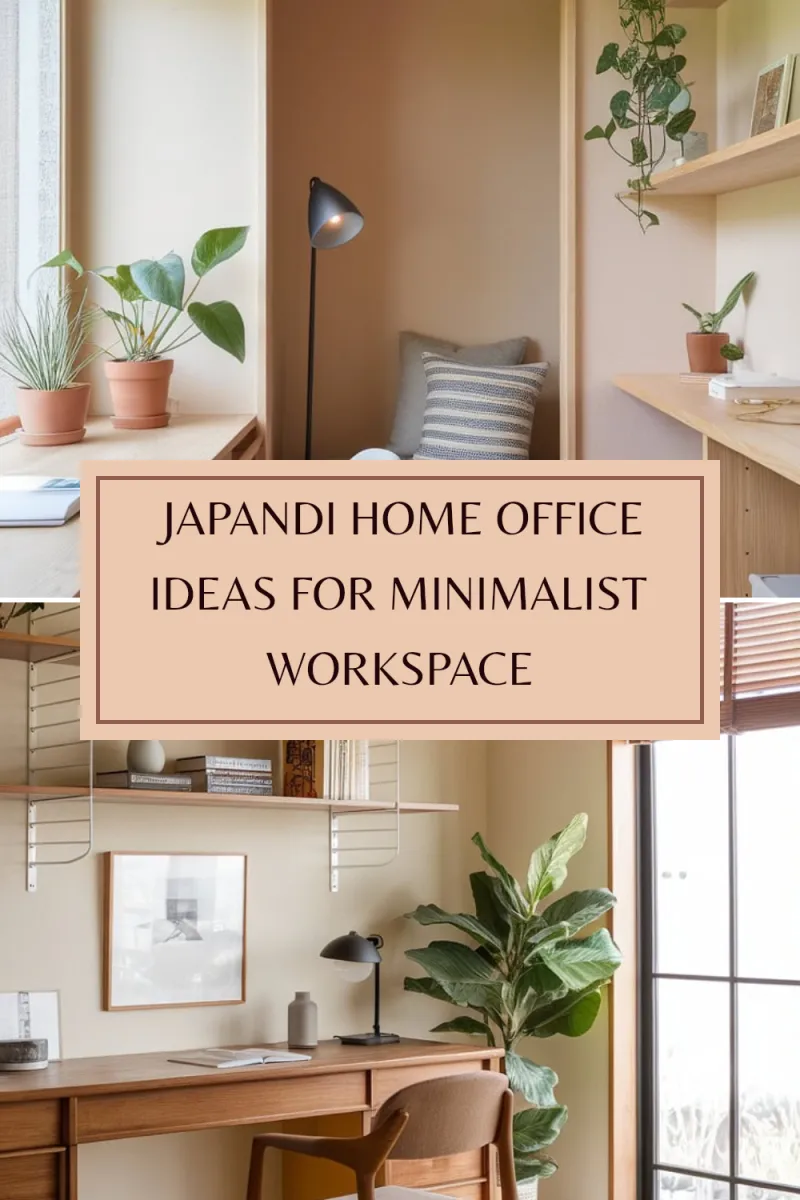
Photo: minimalist Japanese desk workspace with clean lines and natural materials, via i.pinimg.com
Walk into a well-appointed Japanese-inspired room and something immediately shifts. The clutter of the outside world falls away. Every object has earned its place. Every pause between elements feels deliberate. There is a kind of quiet authority in that space — and it turns out, that same authority can be cultivated in a career.
At Franc Franc, our entire brand identity rests on the belief that thoughtful curation is not merely an aesthetic preference — it is a way of living. That philosophy extends naturally into the way one approaches professional life. Whether you are crafting your resume, developing your personal brand, or preparing for a high-stakes interview, the foundational principles of Japanese design offer a surprisingly practical framework for standing out in today's crowded American job market.
Ma: The Power of What You Leave Out
In Japanese spatial design, ma (間) refers to negative space — the intentional gaps between objects, sounds, or words that give meaning to what surrounds them. It is not emptiness for its own sake. It is breathing room that allows the eye, and the mind, to rest and absorb.
Applied to resume design, the concept of ma is transformative. Many American job seekers instinctively fill every inch of their resume with bullet points, dense paragraphs, and exhaustive lists of responsibilities. The result is a document that, despite its volume, communicates very little. A hiring manager scanning fifty resumes in an afternoon will not pause on a page that demands effort to read.
Consider instead a resume that uses white space strategically — where section headers breathe, where accomplishments are separated by visual pauses, and where the most important information is allowed to stand alone. This is not minimalism for vanity. It is architecture for clarity. The recruiter's eye naturally moves toward what is given room to exist.
The same principle applies to your LinkedIn profile and personal website. Resist the impulse to list every certification, every side project, every volunteer role you have ever held. Ask instead: what three or four things, presented with space and intention, tell the truest and most compelling story of who I am professionally?
Wabi-Sabi: Authenticity Over Perfection
Wabi-sabi (侘寂) is perhaps the most widely discussed Japanese aesthetic concept in Western culture — and also the most frequently misunderstood. It is not an endorsement of sloppiness or an excuse for unpreparedness. Rather, it is a recognition that authenticity, imperfection, and the evidence of lived experience carry a beauty that polished artificiality cannot replicate.
For job seekers, wabi-sabi offers a powerful reframe. The American professional culture often pressures candidates to present a frictionless narrative — a seamless arc of promotions, accolades, and forward momentum. Career gaps are hidden. Pivots are disguised. Failures go unmentioned.
But experienced hiring managers and thoughtful employers see through that veneer quickly. What genuinely engages them is a candidate who can speak with honesty and self-awareness about the texture of their journey — including the detours.
If you spent two years out of the workforce caring for a family member, own that experience and articulate what it taught you about patience, resourcefulness, or perspective. If you left a high-paying role to pursue a creative passion that did not ultimately succeed commercially, speak to what you learned and how it sharpened your understanding of your own values. These moments of visible humanity — handled with composure and reflection — do not diminish your candidacy. In the spirit of wabi-sabi, they enrich it.
This philosophy also applies to interview preparation. Rather than rehearsing scripted, flawless answers, practice articulating genuine responses. Authenticity in conversation creates connection. Connection creates trust. Trust gets you hired.
Kanso: Simplicity as a Strategic Asset
Kanso (簡素), often translated as simplicity or elimination of clutter, is one of the seven principles of Zen aesthetics in Japanese design. It advocates for the removal of anything that does not serve a clear purpose — leaving only what is essential, functional, and meaningful.
In the context of personal branding, kanso is an act of courage. It requires you to make choices about who you are professionally rather than attempting to appeal to everyone simultaneously. A personal brand built on kanso has a clear point of view. It communicates a specific type of value to a specific type of employer or client.
Begin by identifying the single most compelling professional narrative you can tell about yourself. Not three narratives. Not a flexible story that shifts depending on the audience. One clear, well-considered statement of purpose. From that foundation, every element of your professional presence — your email signature, your portfolio, your social media bio, your elevator pitch — should reflect that same simplicity.
This discipline is particularly valuable in the interview room. Candidates who ramble, who over-explain, or who answer every question with a preamble before arriving at the point are communicating something unintentional: that they have not yet done the work of understanding themselves clearly. A candidate who responds with calm, precise, well-structured answers signals something entirely different. They signal readiness.
Bringing It Together: The Intentional Job Search
What unites ma, wabi-sabi, and kanso is a common underlying value: intentionality. Japanese design does not happen by accident. Every element of a beautifully composed interior reflects a series of considered decisions — what to include, what to omit, what to highlight, and what to allow to simply exist without explanation.
Your career search deserves that same quality of attention.
Before you update your resume, take an hour to sit with your professional history and ask what genuinely matters. Before you apply to the next role, ask whether it aligns with the narrative you are trying to build. Before your next interview, spend time not rehearsing perfect answers, but clarifying what you actually believe and value — because that clarity will communicate itself far more effectively than any memorized script.
At Franc Franc Careers, we believe the path to meaningful work is not found through volume or urgency, but through the kind of quiet, deliberate curation that transforms a collection of objects into a home — and a collection of experiences into a career worth pursuing.
The principles that guide our aesthetic are available to you, too. Carry them into your job search, and see what space they create.