Before You Say a Word: How Experiential Interview Formats Are Changing What Premium Retailers Look for in Candidates
Photo: Rutger van der Maar from Leiden, The Netherlands, CC BY 2.0, via Wikimedia Commons
For decades, the retail job interview followed a predictable script. A hiring manager would present a series of behavioral or situational questions, and a candidate would respond with rehearsed answers designed to demonstrate competence, enthusiasm, and cultural fit. The format rewarded articulation above all else.
That model is quietly being dismantled — at least within a specific and growing segment of the American retail market.
At premium home goods retailers drawing from Japanese design philosophy, a different kind of interview has begun to take shape. It starts not with a handshake and a question, but with an invitation: to enter a space, to move through it without instruction, and simply to be present within it. What candidates do in those initial, unscripted moments is increasingly the most consequential part of the evaluation.
The Environment as Assessment Tool
Japanese interior philosophy has long understood that a well-composed space communicates more than words can. The concept of ma — the meaningful quality of negative space — suggests that what is absent from a room is as significant as what is present. For brands that have built their identity around this sensibility, it follows logically that a candidate's instinctive relationship with space reveals something a résumé cannot.
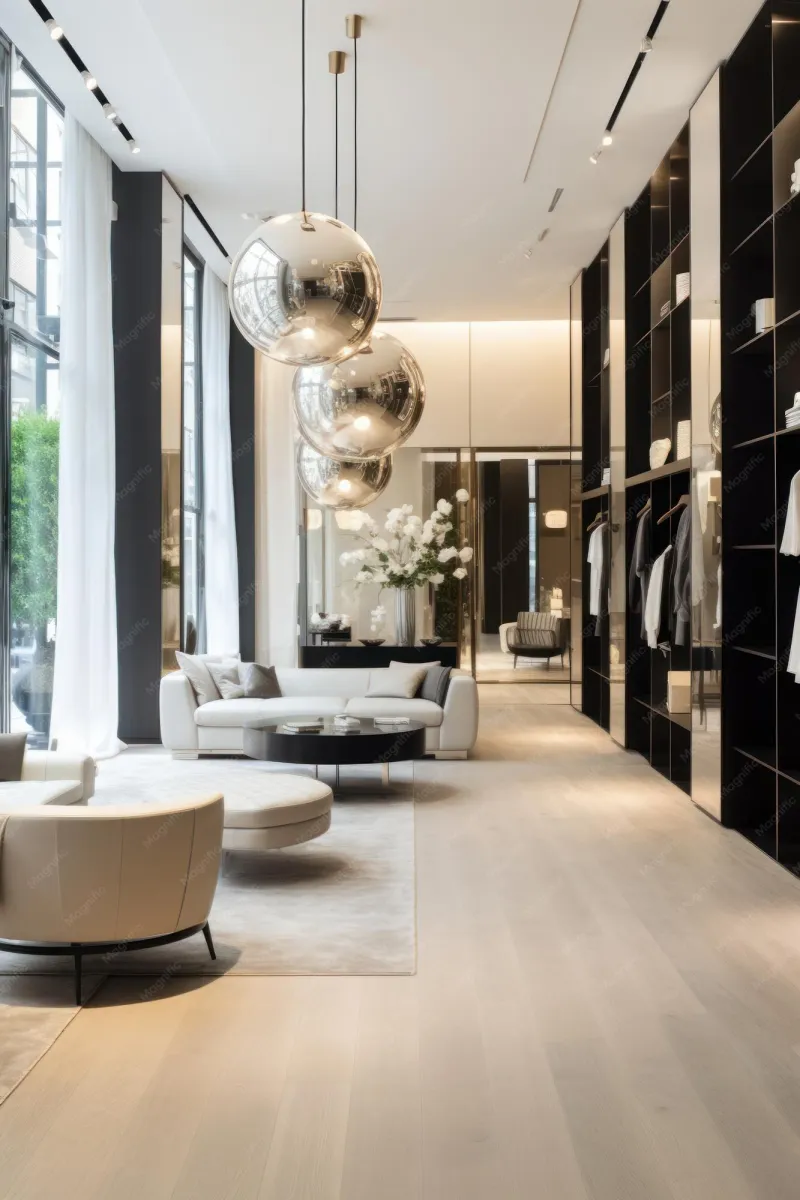
Experiential hiring formats vary by organization, but a common structure involves escorting a candidate into a curated showroom or staging area before any formal discussion begins. The candidate may be asked simply to walk through the space at their own pace. In some formats, they are given no instruction at all. In others, they receive a single, open-ended prompt: observe what you notice, and be prepared to speak to it.
What hiring teams are watching for is not performance. They are watching for instinct. Does the candidate pause at moments of visual tension? Do they slow near objects that carry weight or texture? Do they move through the space in a way that reflects awareness — or do they scan it the way a shopper might, looking for price tags and product labels?
The distinction, according to professionals who have participated in or administered these evaluations, is immediately visible.
Why Verbal Intelligence Is No Longer Sufficient
The shift toward experiential formats reflects a broader evolution in what premium retailers need from their floor staff and design consultants. In environments where the product category is Japanese-inspired home décor — objects selected for their material integrity, their restraint, their capacity to transform the feel of a room — transactional sales fluency is not the differentiating skill.
What matters is the ability to guide a customer through a sensory experience. That requires a professional who has genuinely internalized the aesthetic, not simply learned to describe it.
A candidate who can recite the principles of wabi-sabi but who rushes through a quiet room without pausing has communicated something important about their actual relationship with the philosophy. Conversely, a candidate with a modest résumé who moves with unhurried attentiveness, who lingers near a particular arrangement of objects and can later articulate why it held their attention, has demonstrated something that no amount of coaching can fully replicate.
Hiring managers at this level are not looking for correct answers. They are looking for genuine alignment.
What the Format Actually Measures
Experiential interviews within this context tend to evaluate candidates across several dimensions, most of which are difficult to assess through conventional questioning.
Spatial awareness — the ability to read a room as a composed whole rather than a collection of individual items — is perhaps the most fundamental. Candidates who naturally perceive balance, proportion, and the relationships between objects bring an intuitive foundation that supports everything from product placement to customer consultation.
Sensory pacing is equally important. Japanese design environments are not meant to be consumed quickly. A candidate who understands, at a physical level, that slowness is an act of respect — for the object, for the space, for the customer — will carry that quality into every interaction on the floor.
Observational specificity is what separates genuine aesthetic engagement from polite appreciation. When a candidate is later asked to describe what they noticed, the depth and precision of their response reveals the quality of their attention. Noting that a room felt calm is a surface observation. Identifying that the calm derived from a deliberate absence of competing vertical lines, or from the way natural light was directed toward a single material surface, is a different order of perception entirely.
Preparing for a Format You Cannot Rehearse
The paradox of experiential interviews is that traditional preparation strategies are largely ineffective. You cannot memorize the correct way to walk through a room. You cannot rehearse genuine attentiveness.
What you can do is cultivate the real thing.
Professionals who aspire to roles in Japanese-inspired premium retail would benefit from spending deliberate time in spaces that embody the aesthetic — whether in design showrooms, art galleries, or thoughtfully composed domestic environments. The goal is not to study what to say about such spaces, but to practice being fully present within them.
Visiting Japanese gardens, architectural installations, or curated museum exhibitions with the specific intention of noticing what you notice — without reaching for language immediately — trains the quality of attention that experiential interviews are designed to detect.
It is also worth reflecting on your personal relationship with stillness. Candidates who are accustomed to filling silence, who feel the need to narrate their experience as it unfolds, may find this format uncomfortable. That discomfort is itself informative. Learning to occupy a quiet space without anxiety, and to trust that observation is a form of action, is preparation that extends well beyond the interview room.
A Signal of Where the Industry Is Heading
The emergence of experiential hiring formats is not an isolated trend. It reflects a deeper commitment by premium retailers to build teams whose sensibility is genuinely continuous with the brand's identity — not merely aligned with it on paper.
For job seekers who have spent years developing a real relationship with design, with craft, with the particular quality of attention that Japanese aesthetic philosophy demands, this evolution represents a significant opportunity. The interview is no longer purely a test of what you can say. It has become, in the truest sense, a test of who you are in a room.
For those whose instincts run in this direction, the format is not a barrier. It is an invitation.