Beyond the Stockroom: How Japanese Operational Philosophy Is Quietly Transforming Retail Management Careers Across America
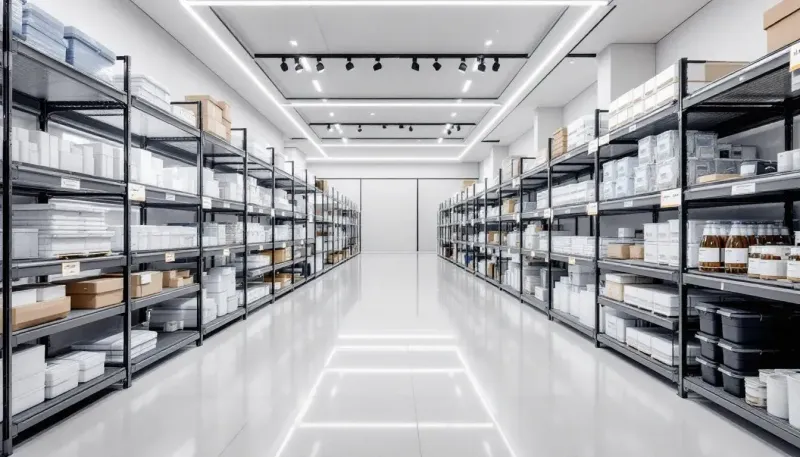
Photo: organized retail stockroom modern minimalist store operations management, via blog.waveplm.com
For decades, the path from entry-level retail associate to store manager followed a familiar arc: accumulate floor hours, demonstrate reliability, and wait. The criteria for advancement were rarely codified, and the skills required to run a high-performing retail environment were largely absorbed through observation rather than formal instruction.
That paradigm is shifting. Across the United States, a meaningful number of specialty retailers — particularly those operating in the home décor, lifestyle, and design categories — are importing a different framework entirely. Rooted in Japanese manufacturing and workplace philosophy, operational systems such as kaizen, 5S, and muda reduction are moving out of factory environments and into American showrooms, fundamentally altering what it means to manage a retail space well.
For professionals who understand what these systems are and how to apply them, the career implications are significant.
What Kaizen Actually Means on the Sales Floor
The word kaizen translates roughly as "change for the better" or "continuous improvement." In its original industrial context, it described a structured approach to incremental process refinement — small, consistent adjustments that, over time, yield substantial operational gains. Toyota famously built much of its production philosophy around the concept, and its influence spread throughout global manufacturing during the latter half of the twentieth century.
In a retail context, kaizen manifests differently but with comparable intent. Rather than optimizing a production line, retail managers applying kaizen principles focus on identifying friction points in daily operations: the receiving process that creates bottlenecks on Tuesday mornings, the restocking sequence that causes associates to walk unnecessary distances, the checkout procedure that slows during peak hours. Each inefficiency, however minor, represents an opportunity for targeted refinement.
"When I first started applying kaizen thinking to our floor operations, I was skeptical that it would translate," said one operations director at a home goods retailer in the Chicago area, who asked to be identified only by her first name, Miriam. "But the logic is the same. You're looking for waste in the system — waste of time, waste of motion, waste of attention. Once you start seeing the floor that way, you can't unsee it."
For Miriam, the shift toward structured operational thinking coincided with a promotion to regional oversight. Her ability to document processes, train teams on standardized workflows, and present measurable improvement data to senior leadership made her a compelling internal candidate when a director-level position opened. "The retailers who are growing right now want managers who can speak the language of operations," she noted. "Kaizen gives you that language."
The 5S System and Its Relevance to High-Design Retail
Closely related to kaizen is the 5S methodology — a workplace organization system derived from five Japanese terms: seiri (sort), seiton (set in order), seiso (shine), seiketsu (standardize), and shitsuke (sustain). Together, these principles describe a disciplined approach to physical workspace management that prioritizes clarity, efficiency, and consistency.
In a showroom environment — particularly one where visual presentation is central to the brand identity — 5S principles align naturally with merchandising best practices. The "sort" phase encourages teams to eliminate excess product and clutter that dilutes the visual impact of a display. "Set in order" ensures that every item has a designated location, reducing the time associates spend searching for inventory. "Shine" encompasses cleanliness and presentation standards. "Standardize" codifies these practices into repeatable procedures. And "sustain" builds the habit structures that prevent regression.
For a brand like Franc Franc, whose aesthetic is grounded in the Japanese design tradition of purposeful simplicity, the alignment between 5S principles and showroom presentation is intuitive. Every item on the floor carries intentional meaning; disorder undermines that message. Associates who understand why the organizational structure exists — not merely how to maintain it — become far more effective stewards of the brand environment.
Why This Knowledge Creates Career Leverage
The practical value of operational fluency in a retail management career extends well beyond day-to-day efficiency. Retailers competing in the premium home décor segment face mounting pressure to justify their cost structures, demonstrate consistent customer experiences across locations, and retain skilled employees in a tight labor market. Managers who can address all three of these challenges through structured operational frameworks are increasingly rare — and increasingly valued.
Daniel, an assistant store manager at a lifestyle retail brand in Seattle, began studying lean operations principles independently after noticing that his store's inventory discrepancies were undermining customer satisfaction. "We'd have items listed as in-stock that weren't findable. Associates were spending time hunting instead of helping customers," he explained. After implementing a modified 5S system for the stockroom and a kaizen-style weekly review process for his team, shrinkage decreased and customer satisfaction scores improved measurably within two quarters.
That outcome translated directly into career advancement. Daniel was promoted to store manager within eight months and has since been invited to participate in a company-wide operational task force. "The promotion wasn't just about the results," he reflected. "It was about being able to explain what I did and why it worked. That's what got leadership's attention."
Formalizing the Skill Set
For retail professionals who wish to develop this expertise deliberately, several pathways exist. Lean Six Sigma certifications — which incorporate many of the same Japanese operational principles — are available at multiple levels and are increasingly recognized by retail employers as markers of operational seriousness. Community college coursework in operations management, supply chain logistics, and business process improvement can also provide foundational knowledge applicable to a retail context.
Beyond formal credentials, professionals can build operational fluency through self-directed study of foundational texts — Masaaki Imai's Kaizen: The Key to Japan's Competitive Success remains a widely cited introduction — and by seeking out mentors within their organizations who have implemented these systems in practice.
It is also worth noting that familiarity with these frameworks carries particular weight at retailers whose brand identity is directly connected to Japanese design heritage. In that context, operational philosophy and cultural philosophy are not separate concerns. They are expressions of the same underlying commitment to craftsmanship, intention, and respect for the environment — whether that environment is a factory floor or a beautifully arranged showroom.
A New Definition of Retail Leadership
The retail management careers emerging from this operational shift look different from those of a generation ago. They require analytical capability alongside interpersonal skill, process discipline alongside aesthetic sensibility, and an understanding that the customer experience begins long before a shopper enters the store — in the receiving dock, the stockroom, and the morning briefing.
For ambitious professionals willing to invest in this knowledge, the opportunity is substantial. American retail is actively seeking leaders who can bridge the gap between beautiful presentation and operational excellence. Japanese organizational philosophy, brought thoughtfully into the American retail context, offers a remarkably coherent framework for doing exactly that.