Opening Day in Odessa: Inside the Teams Bringing Japanese Retail Rituals to American Strip Malls
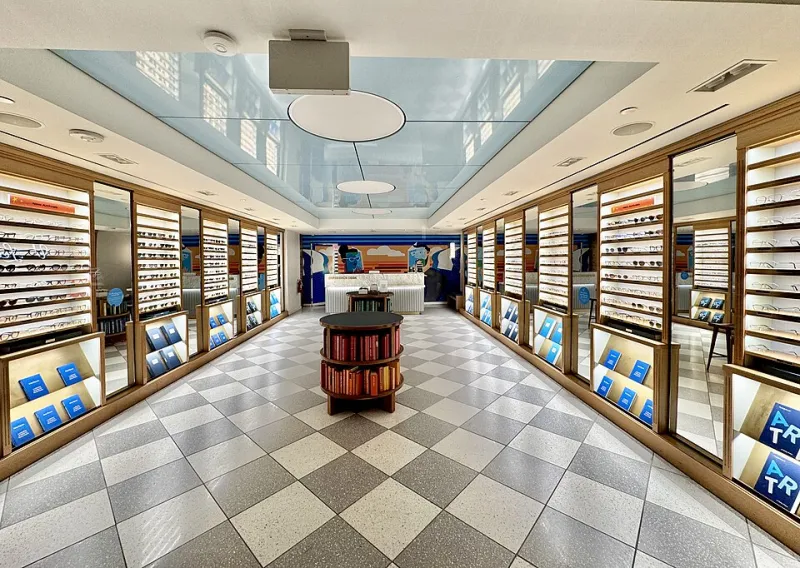
Photo: Harrison Keely, CC BY 4.0, via Wikimedia Commons
The storefront sits between a nail salon and a cellular phone repair shop, in a strip mall off a six-lane road. Six weeks from now, this will be a Japanese lifestyle brand store, with precisely folded linens, seasonal displays rotated on a strict calendar, and a greeting ritual refined over decades in Tokyo showrooms. Right now, it is drywall, dust, and a small team of people trying to answer a deceptively hard question: how does this become itself, here?
The Translation Is Not the Furniture
The easy part, veterans of these openings say, is the physical build-out. Fixtures ship from Japan with obsessive documentation. The hard part is translating behavior. In Japan, a store's folding standard is a form of respect — for the product and for the customer who will pick it up. In an American labor market with high retail turnover and different service norms, teaching that standard means teaching its meaning, not just its motions.
One opening-team trainer described the approach simply: "We never teach the fold first. We teach why the fold matters. Then the fold takes care of itself." Staff coaching covers the philosophy of presentation, the rhythm of seasonal resets, and the etiquette of greeting — how to be present without hovering, attentive without pressure.
The Real Estate Problem
Japanese showrooms are designed around specific spatial assumptions: compact footprints, deliberate sightlines, entry sequences that slow the customer down. American strip malls offer the opposite — wide, deep boxes with parking-lot entrances and no architectural narrative. Site scouts working for Japanese brands have become unexpected specialists, evaluating not just traffic counts and lease rates but whether a space's proportions can be choreographed into the brand's intended experience.
The best of these scouts carry a kind of cultural fluency that no spreadsheet captures. They can look at an awkward corner entrance and see where a threshold moment could be built. They know which landlords will tolerate a six-week fixture installation and which will not.
Careers No One Planned For
The expansion of Japanese lifestyle retail across the US has quietly created a cluster of hybrid jobs that appear on almost no career site under their real names:
- Cultural site scouts who pair commercial real estate expertise with an instinct for how Japanese retail philosophy maps onto American spaces.
- Service philosophy trainers who coach American staff in Japanese hospitality traditions, translating concepts like anticipatory care into everyday floor behavior.
- Ritual operations leads who own the seasonal display calendar, ensuring that the brand's rhythm of change — so central to its identity — survives the transition to a new climate and a new retail calendar.
- Fixtures and flow coordinators who manage the physical translation of Tokyo showroom layouts into buildings they were never designed for.
What It Takes to Join a Team Like This
People who thrive on opening teams tend to share a tolerance for ambiguity and a genuine curiosity about the why behind retail rituals. Prior store experience helps, but the differentiator is the ability to hold two sets of expectations at once — the brand's and the local customer's — and refuse to flatten either one.
For job seekers, the advice from those already in the role is consistent: demonstrate that you have thought about service as a system, not a script. The teams building these stores are, in effect, writing a new chapter of American retail, one folded towel and one carefully chosen strip mall at a time.