The Unscripted Hour: How Lunch, Small Talk, and Store Tours Quietly Decide Who Gets Hired in Premium Retail
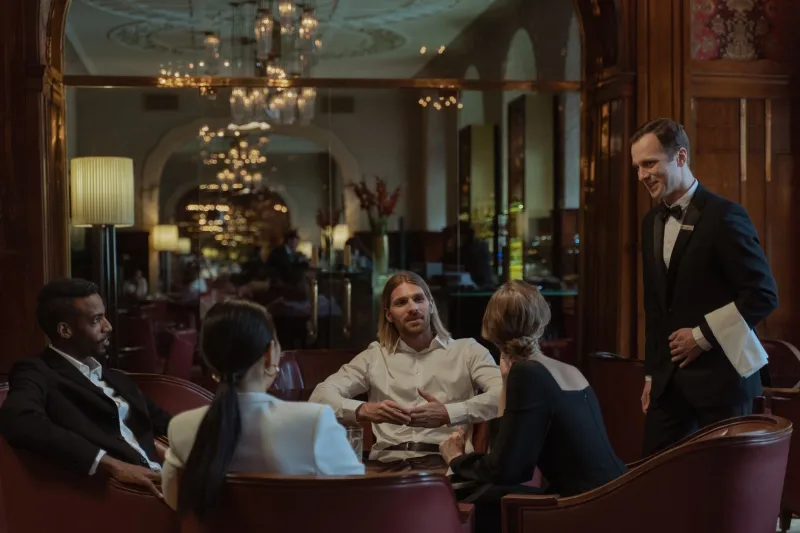
Ask any candidate preparing for a role at a premium home décor brand what they are rehearsing, and you will hear about competency questions, portfolio talking points, and a polished answer to "Why this company?" What almost no one rehearses is the hour afterward — the lunch, the store tour, the walk back to the parking garage. Yet across the American premium retail sector, that unscripted hour has become where hiring decisions are quietly made.
The reasoning is straightforward, even if it is rarely stated aloud. On the sales floor of a design-forward brand, the product is not merely sold; it is lived. A customer's experience depends less on a script than on the associate's instinctive attentiveness — noticing hesitation, reading a room, offering warmth without hovering. Those instincts cannot be demonstrated in a structured interview. So hiring managers have learned to look for them everywhere else.
The Meal Is the Interview
Consider the shared meal. It may be presented as a courtesy — "Let's grab lunch, my treat" — but it functions as a live assessment of hospitality defaults. How do you treat the server? Do you order something manageable, or the messiest item on the menu? Do you let conversation breathe, or fill every pause? Are you gracious when the food arrives late?
A candidate who thanks the server by name, keeps their phone out of sight, and matches the interviewer's conversational rhythm is demonstrating, in real time, the exact behaviors that define a great customer interaction. Nobody writes "handled lunch gracefully" on an evaluation form, but the impression registers — and it lingers.
Store Tours: The Walkthrough That Watches Back
The store tour presents a different kind of unstructured test. When a hiring manager walks you through the sales floor, they are not just showing you the merchandising. They are watching what you notice.
Do you comment on the way a table setting is styled? Do you pause at a display and ask how it was built? Do you touch the fabric samples with genuine curiosity, or drift past them checking your phone? Candidates who engage with the environment — who treat the store as something worth studying rather than something to be escorted through — signal the observational appetite that premium retail depends on.
A useful habit: arrive having already visited the location, then use the tour to go deeper. "I noticed the lighting on the second floor is much warmer than the first — is that intentional?" demonstrates preparation and sensory awareness in a single sentence.
Small Talk Is Not Small
Then there is the small talk — the weather, the traffic, the coffee. American candidates often treat it as filler to be endured before the real questions begin. Hiring managers see it differently. Casual conversation reveals composure under low stakes, which is often a better predictor of floor behavior than composure under high stakes.
You do not need to be charming or extroverted. You need to be present. Ask a question or two about the person interviewing you. Listen to the answer. Let a moment of silence exist without scrambling to fill it. In a brand culture shaped by Japanese design philosophy — where restraint and attentiveness are core values — the candidate who is comfortable in quiet company often outperforms the one performing enthusiasm.
Bringing Intentionality Off-Stage
None of this means performing a character. It means extending the preparation you already do into the spaces where it is rarely expected:
- Choose the meal with care. Order something you can eat comfortably while talking. Skip the alcohol, even if it is offered, unless the setting is genuinely celebratory and you can nurse a single glass.
- Treat every employee as an evaluator. The receptionist, the barista, the associate who holds the door — courtesy extended when no one is formally watching is precisely what is being watched.
- Prepare two or three genuine observations. About the store, the neighborhood, the brand's recent work. Deploy them naturally, not as talking points.
- Manage your exits. The final handshake, the thank-you email, the grace with which you leave — all of it remains part of the assessment until you are fully out of the building.
The Deeper Point
There is a temptation to read all of this as a game with hidden rules, and to resent it. That reading misses what premium retail is actually testing for. A brand that sells intentionality — objects chosen with care, arranged with care, presented with care — is entitled to hire for it. The lunch table and the store tour are not ambushes; they are the most honest version of the job, unedited by rehearsal.
So the next time a final-round interview ends with "Want to grab a bite?" or "Let me show you around," resist the urge to relax. Consider it, instead, the truest part of the day — and the one most within your control. Bring your full attention off-stage. In premium retail, that is where the hiring is happening.